
Publications
The Heritage Society has published a number of books on the history of Hartley Wintney, several of which are by Andy Morris who is a Heritage Society committee member responsible for historical research. All books can be ordered using our on-line order form.
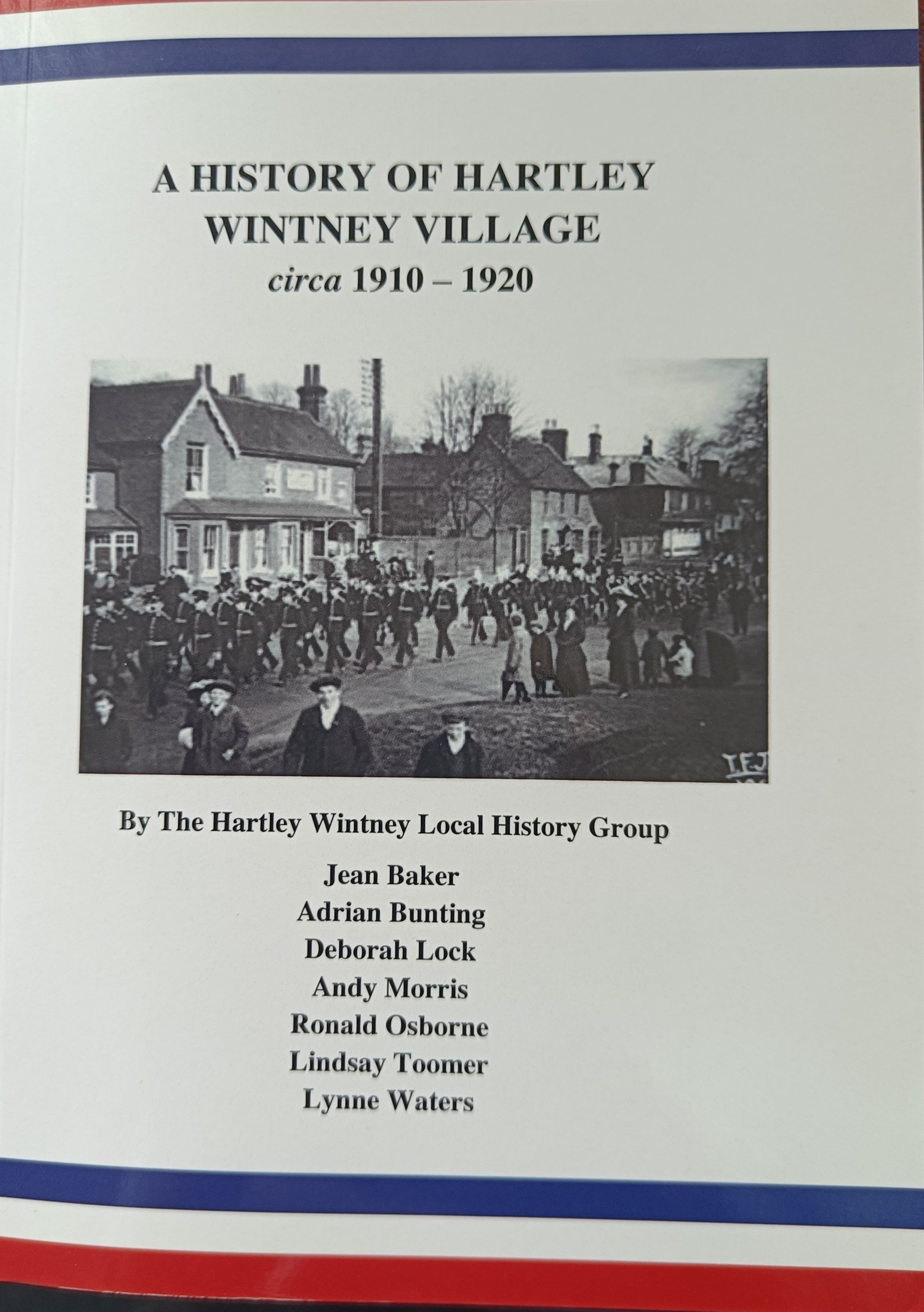 |
This well researched book by Adrian Bunting and others, describes the First World War years in a moving account through the losses born by the village including at the battles of Ypres, Mons, Gallipoli, the Somme and Passchendaele. Introductory chapters talk of a Parish with busy High Street, 14 public houses, a volunteer Fire Brigade run by the Parish Council, an infant and a secondary school closed from time to time due to the outbreak of infectious diseases such as Scarlet Fever, an active village social scene with occasional village Charabanc trips, active church communities providing regular Sunday School, concern about the state of housing for the poor and a fascinating description of the role of women. This book can be ordered via our order form at £5 per copy. |
|
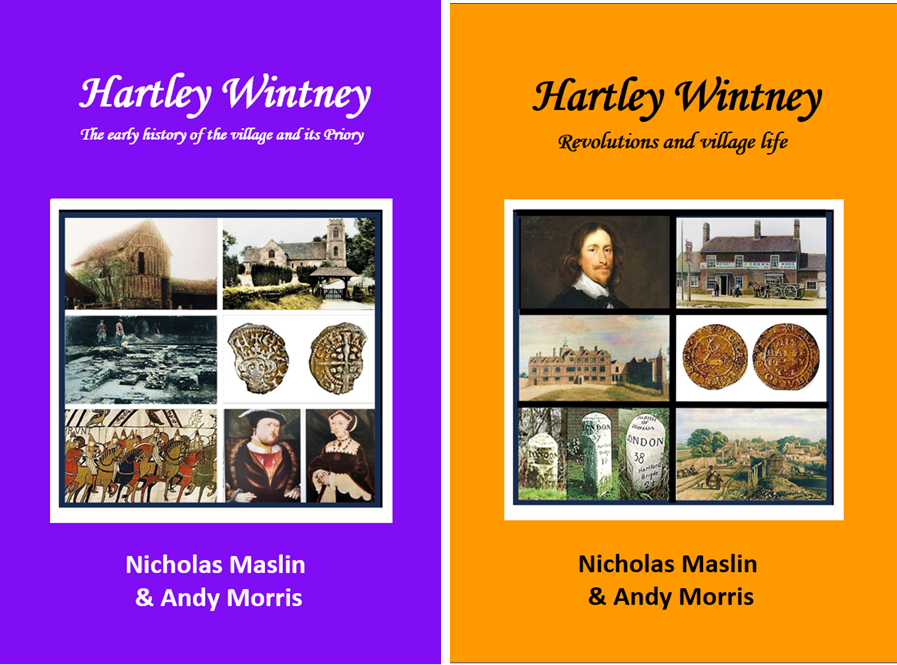
Two new books by local historians Nicholas Maslin and Andy Morris on the history of Hartley Wintney. The early history of the village and its Priory (Saxons to Tudors) covers the period from the very earliest settlers up to the end of the Elizabethan period after Wintney Priory had been dissolved. Revolutions and village life (Stuarts to Victorians) covers the 250 years between Elizabeth I’s visit to Elvetham in 1591 and the first national census in 1841. Both books are 150 pages in length and fully illustrated in colour. |
 |
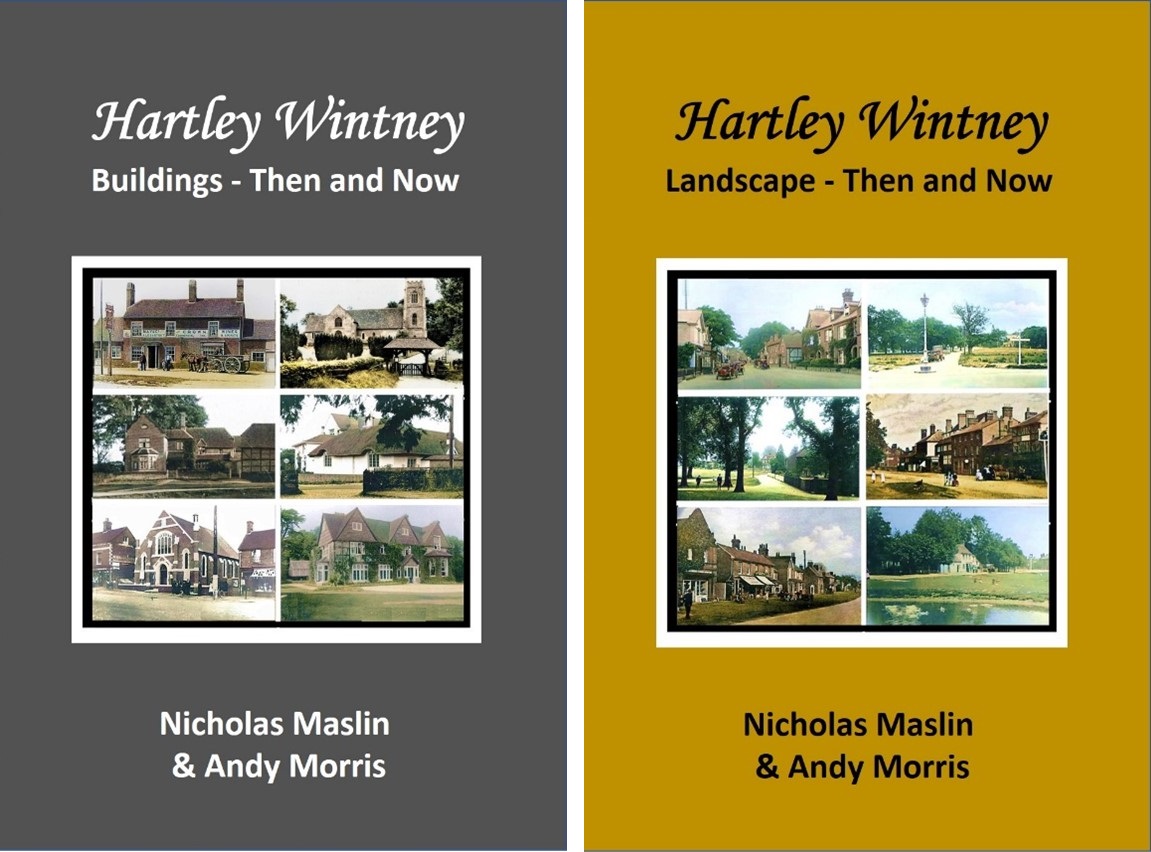 |
These two books, by two local historians Nicholas Maslin and Andy Morris, present a format of Then and Now to celebrate some of the rich history of the civil parish of Hartley Wintney. Each book, of 122 pages in full colour, contains well over one hundred old black and white photographs which have been digitally recoloured to provide a better contrast and comparison to their modern equivalents. This gives a new perspective on some previously much viewed scenes and helps to illustrate how a particular building, group of buildings, or landscape has changed from its appearance since the nineteenth or early twentieth centuries. Both books can be ordered via our order form at £10 per copy with ALL profits generated from sales being donated to Hartley Wintney Voluntary Care Group. |
|
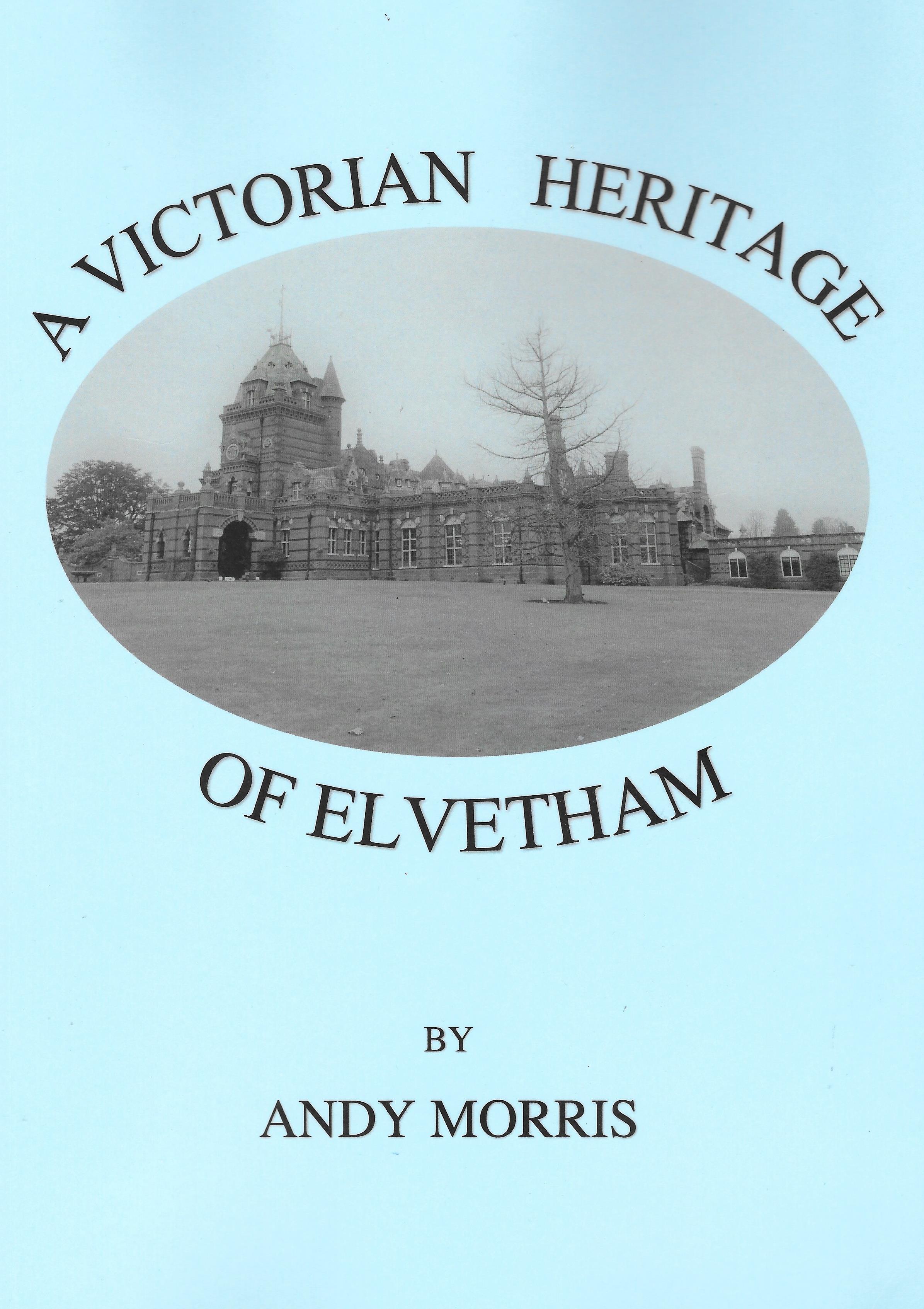
The Victorian Heritage of Elvetham (published in September 2022), It is a companion publication to the previous book on the Victorian Heritage of Hartley Wintney. Andy Morris has again made use of the tithe map for Elvetham, published in 1839, together with the seven census returns between 1841 and 1901 to document and provide a picture of Victorian life in the old ecclesiastical parish of Elvetham before it was incorporated into the present day civil parish of Hartley Wintney. A series of maps have been drawn and compared with post Victorian Ordnance Survey maps to illustrate how surprisingly little Elvetham has changed since the Victorian period. |
 |
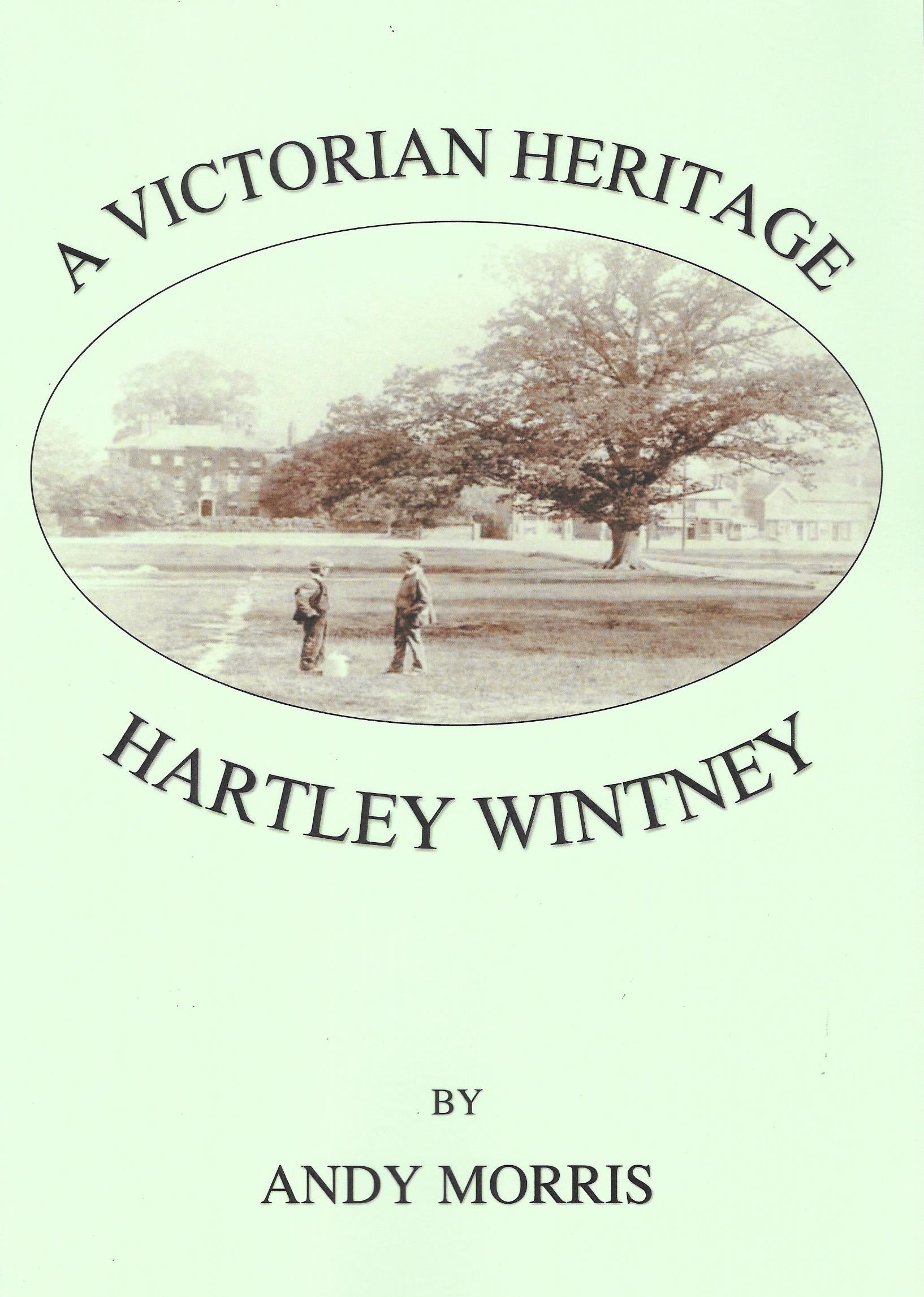 |
This was published in 2021 and is a follow up to Andy’s previous book. It takes the story of Victorian Hartley Wintney forward from the beginning of Victoria’s reign right through until her death in 1901. The Victorian period was one of great change in society and the effects of these changes are reflected in this book. It uses information from the seven national censuses carried out during Victoria’s reign together with ordnance survey maps and parish records to build a picture of the way life developed in the village during this period. |
| This book, by Andy Morris, was published in 2020 and takes a look at life in the village around the time of Queen Victoria’s ascent to the throne in 1837. It uses census information from 1841 coupled with the detailed tithe map drawn up in 1842 to provide a background on how the village looked and how people lived during this early Victorian period of British history. | 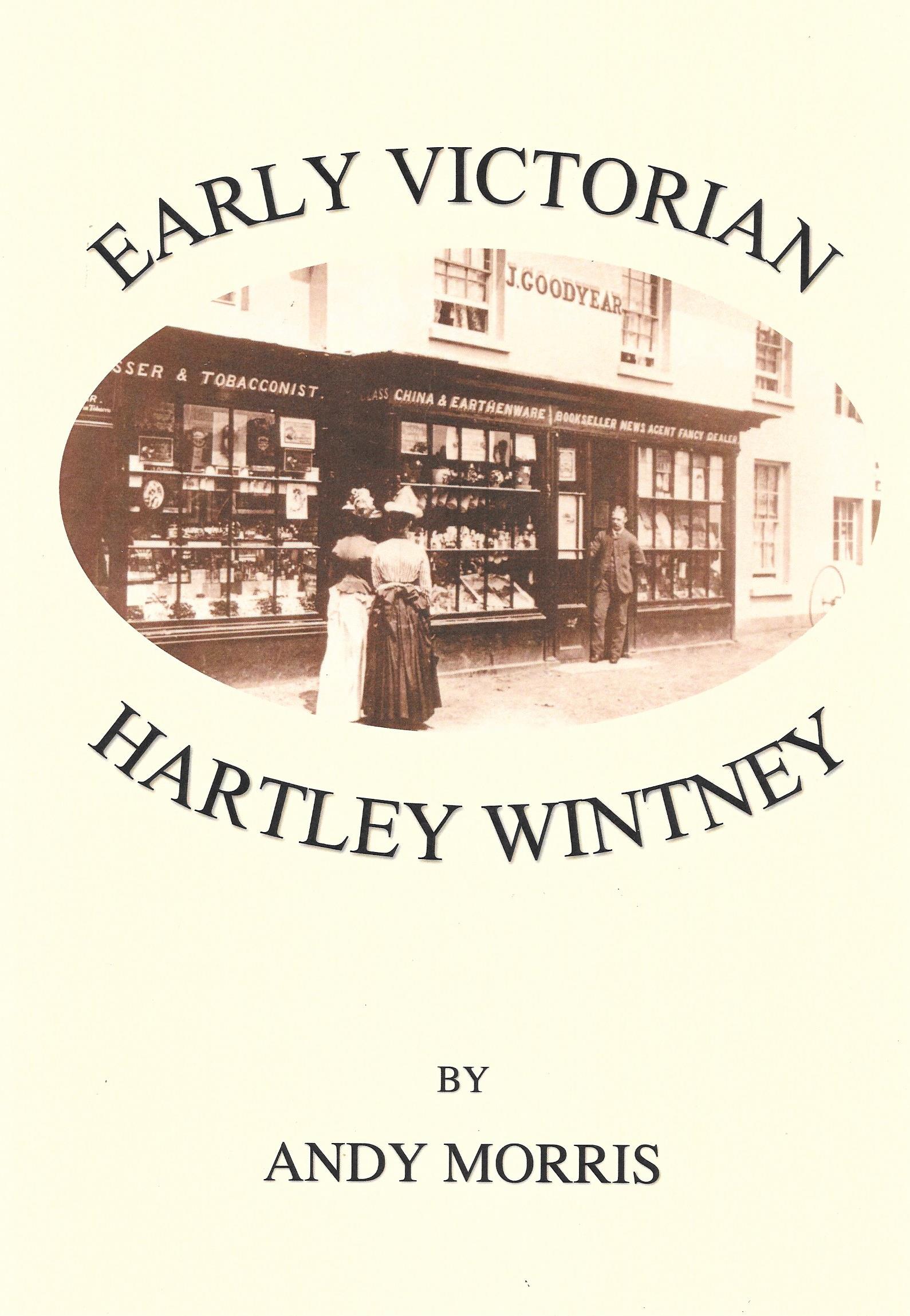 |
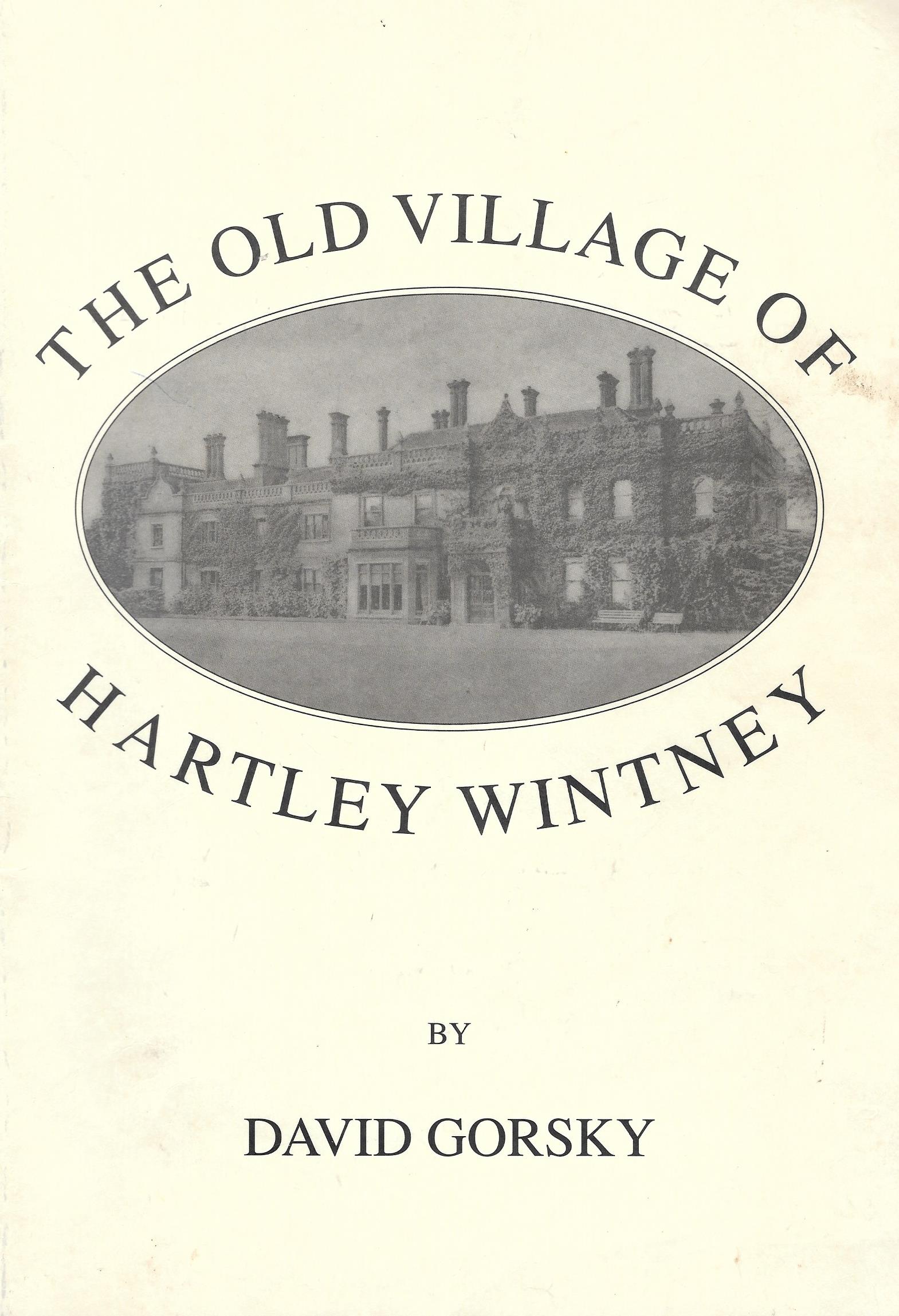 |
David Gorsky was a previous Chairman of the Heritage Society and a prominent local historian. His book was originally published in 1970 and last revised in 1994. It is divided up into a series of walks around various parts of the parish with a historical commentary provided for each walk. The history of Individual properties are described together with a background to the development of the village from the time of Elizabeth I to the present day. It is full anecdotes of local tales and characters and remains the most comprehensive history of the village yet produced. |
Planning
Welcome to the Planning section of our website where you will find information and updates on Current planning Applications, the Hart Local Plan and the Hartley Wintney Conservation Area.
Each of the posts on current applications includes a planning reference number, where available, which you can use to search for more information and make comments on the application in Hart's on-line applications.
The Planning Process
LOCAL PLANNING PROCESS
Parish councils can only agree to comment on planning applications in properly called council or committee meetings which the public can attend. ... Parish councils are statutory consultees and have no powers to approve or reject planning applications, they can only comment or not on applications.
Hatley Wintney Parish Council is consulted by Hart District Council on all planning applications. Any views expressed by the Parish Council will be taken into account by Hart before a decision is made, providing the points made are relevant to the determination of a planning application. The Parish Council publish dates of their planning meetings and subsequent minutes on their web site.
Do parish councils grant planning permission?
• Town and parish councils are not Planning Authorities. Town and parish councils are only statutory consultees in the planning process.
• This means that they only have the right to be informed of planning applications within the parish.
• They cannot approve or reject planning applications.
• They can only comment on planning applications in the same way that individuals can comment.
• Consequently the length of time taken to determine a planning application is governed by the local planning authority not the parish council.
• A parish council can request that it be given extra time to comment on an application.
• The decision whether this is granted rests solely with the planning authority and it’s own deadlines for decision making.
How do parish councils comment on planning applications?
• Parish councils can only agree to comment on planning applications in properly called council or committee meetings which the public can attend.
• The comments agreed in the council meeting are submitted in writing by the parish clerk to the relevant planning authority.
• The process is exactly the same as that of an individual wishing to comment on a planning application.
• Parish councils are statutory consultees and have no powers to approve or reject planning applications, they can only comment or not on applications.
Therefore as can be seen from the above the final decision is made by Hart, not the Parish Council.
A guidance document from HDC that provides more information is available from here
Historical Village Walks Updated
West Green, Murrell Green and the Whitewater Valley Walk
Approximately 3½ to 4 miles - 1½ - 2 hours
This walk, first published in 1993, has been updated. Please click here to download the walk
Explore Elvetham by Footpath
This walk was first published in 1988. Please click here to download the walk
Elvetham Walks by Nigel Beazley
Approximately 6 miles
This walk was first published in 1999. Please click here to download the walk
2025 Update: The new owners of the Elvetham Hotel now permit walkers to go through the grounds without seeking prior permission. Therefore the most attractive option of a circular walk may now be taken without the need for prior planning.
An Autumn Walk to Poland Mill
Allow approximately 1½ hours
This walk was first published in 1996. Please click here to download the walk
Hazeley Heath - haven for horses and butterflies
Approximately 2¾ miles, allow 1¼ hours
This walk was first published in 1984. Please click here to download the walk
Whitewater Walk
This walk was first published in 1996. Please click here to download the walk
The Works - from gas to Water
This walk was first published in the 1985 Autumn issue of the Hartley Row Journal. Please click here to download the walk
The North West Frontier - Whitewater Country
Allow approximately 1½ or 1¾ hours depending on route
This walk was first published in the 1985 Spring issue of the Hartley Row Journal. Please click here to download the walk
Hartley Wintney Conservation Area
The Hartley Wintney Conservation Area was last reviewed and updated in November 2008 and can be viewed on the HDC web site here

